Beneath the Stars: A Midnight Adventure at Baxter Ranch
There is something magical about stepping outside after midnight and looking up.

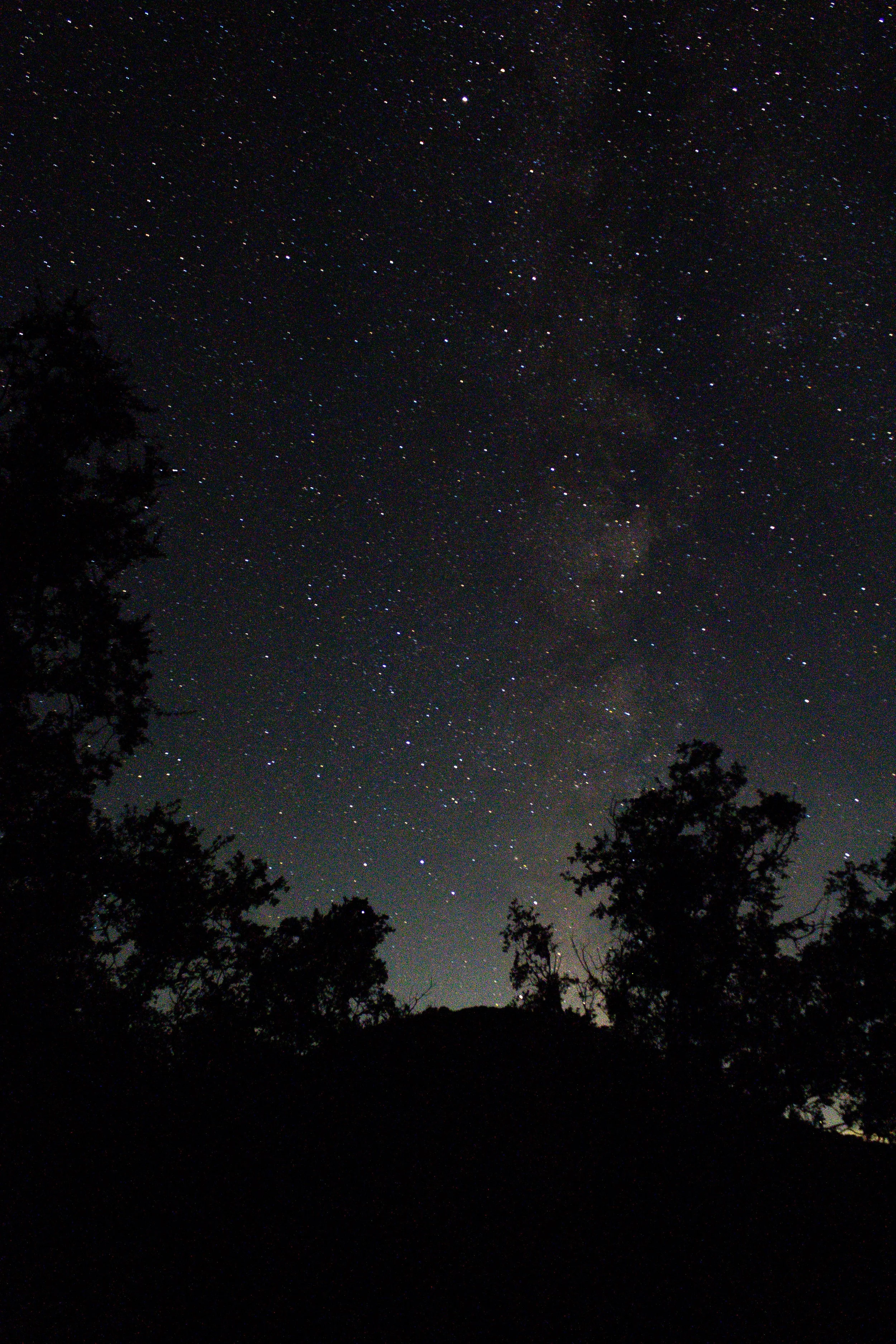
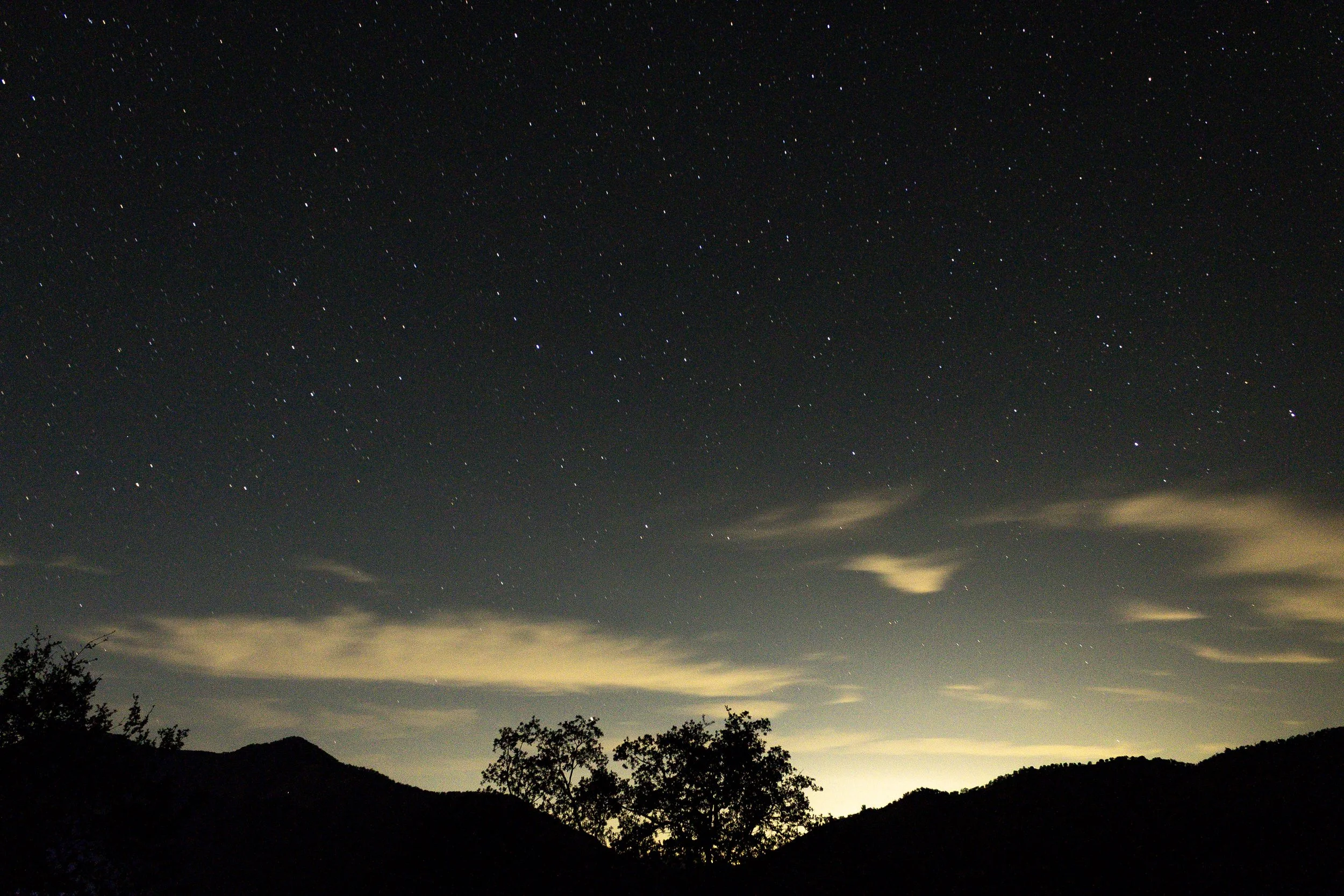
On July 14, I set my alarm for 1:00 a.m., grabbed my camera, and spent the next two hours wandering Baxter Ranch beneath one of the darkest skies of the summer. With the new moon providing exceptionally dark conditions and very little light pollution surrounding our property, the stars seemed endless. The Milky Way stretched overhead like a glowing river across the sky, and every few minutes another shooting star flashed through the darkness.
Photography has a way of slowing time. Standing beneath the stars, I could already see thousands of them stretching across the sky, along with the faint band of the Milky Way overhead. By using a 30-second exposure at f/4.5 and ISO 1250, the camera gathered light over time, revealing the Milky Way's intricate clouds in greater detail and preserving the brief paths of shooting stars that disappear in the blink of an eye. On a truly dark night, the human eye can see 2,000–3,000 stars, but a long exposure captures even more of the beauty that surrounds us, creating images that reflect the wonder of standing beneath an unspoiled night sky.
One of my favorite things about staying at Baxter Ranch is that nights like this aren't uncommon. Tucked away in the Sierra Nevada foothills, far from the glow of city lights, the ranch offers remarkable stargazing nearly year-round. On clear summer nights, the Milky Way becomes the centerpiece of the sky, revealing constellations that have inspired stories and guided travelers for centuries.
Exploring the Summer Sky
As I stood quietly beneath the stars, camera clicking every thirty seconds, I couldn't help but wonder how many stories have been told beneath these same constellations.

Cygnus – The Swan
One of the first constellations you'll likely notice is Cygnus, also known as The Swan. It appears to soar directly through the Milky Way with its wings outstretched. Its brightest star, Deneb, is one of the most luminous stars visible from Earth and forms part of the famous Summer Triangle. Cygnus is also known as the Northern Cross, making it one of the easiest constellations to recognize once you know what to look for.
Lyra – The Harp
Nearby is the small but beautiful constellation Lyra, home to Vega, one of the brightest stars in our night sky. Vega shines with a brilliant blue-white light and has guided astronomers for centuries. In fact, about 12,000 years ago, Vega served as Earth's North Star due to the slow wobble of our planet's axis—and it will again thousands of years from now.
Aquila – The Eagle
Flowing south along the Milky Way is Aquila, the mighty eagle. Its brightest star, Altair, is another point of the Summer Triangle and lies only about 17 light-years from Earth, making it one of our closer stellar neighbors. Aquila is often found soaring through the bright star clouds that make summer stargazing so spectacular.
Scorpius – The Scorpion
Closer to the southern horizon sits Scorpius, one of the few constellations that truly resembles the creature it's named after. Its heart is marked by the brilliant red star Antares, often called the "Rival of Mars" because of its striking reddish color. On especially clear evenings, you can trace the scorpion's long curved tail stretching across the sky.
Sagittarius – The Archer
Just beside Scorpius lies Sagittarius, often easier to recognize as the famous "Teapot." While it may seem like just another constellation, Sagittarius points toward something extraordinary—the very center of our Milky Way galaxy. Roughly 27,000 light-years away lies the dense galactic core, filled with countless stars, glowing nebulae, and a supermassive black hole known as Sagittarius A*. When you look toward Sagittarius from Baxter Ranch, you're looking toward the brightest and most densely populated region of our galaxy.
The Summer Triangle
One of the easiest star patterns to find overhead is the Summer Triangle. Although it isn't an official constellation, it's formed by three brilliant stars:
Vega in Lyra
Deneb in Cygnus
Altair in Aquila
Once you locate these three stars, they become an excellent guide for exploring the rest of the summer night sky.
Why the Stars Shine So Bright Here
One of the things that makes Baxter Ranch so special is what isn't here—city lights.
Light pollution washes out all but the brightest stars in many towns and cities. In some urban areas, only a few dozen stars are visible. Here at Baxter Ranch, the absence of artificial light allows thousands of stars to emerge, revealing the Milky Way in breathtaking detail. It's a reminder of what the night sky looked like long before streetlights and skyscrapers filled our horizons.
On a truly dark night, the human eye can see 2,000–3,000 stars at once. The camera, however, sees even more. Every 30-second exposure revealed countless stars that weren't immediately visible to the naked eye, making each photograph feel like discovering an entirely new sky.
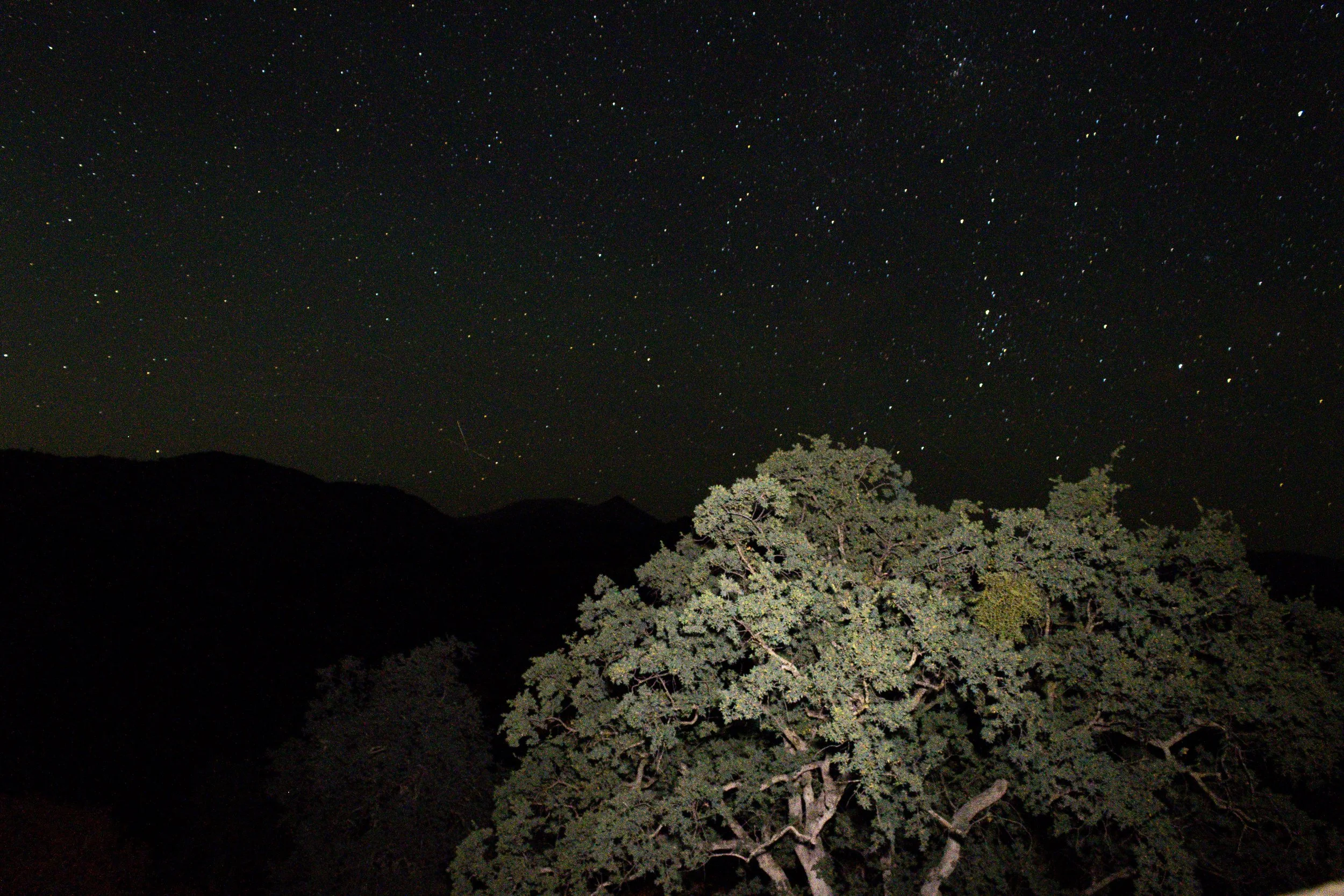
As I stood there in the cool mountain air between 1:00 and 3:00 in the morning, listening to nothing but the quiet sounds of nature, I realized that some of the best experiences at Baxter Ranch aren't planned at all. They happen when you simply step outside, look up, and allow yourself to slow down.
Whether you're enjoying a peaceful evening at the Hilltop House, relaxing beside the Creekside Yurt, or gathering around the campfire with family and friends, don't forget to spend a few minutes under the stars. You never know when you'll catch a shooting star—or find yourself standing beneath the glowing heart of our galaxy.
Sometimes the greatest luxury isn't something you can hold in your hands.
Sometimes, it's simply having the chance to experience a sky that reminds you just how vast and beautiful the universe truly is.